Market Overview: The Numbers Tell the Story
The European ATV and UTV market has entered a phase of sustained, accelerating growth. Valued at approximately $3.85 billion in 2023, the market is projected to reach $7.16 billion by 2030 — a compound annual growth rate (CAGR) of 8.5%. These aren't speculative figures. They reflect real purchasing patterns, dealer network expansion, and regulatory shifts that are already underway.
Germany leads as the continent's single largest market, valued at $472 million in 2023 and projected to hit $916 million by 2030 at a CAGR of 9.1%. France follows closely, tracking from $621 million to an estimated $1.12 billion over the same period. Italy has emerged as the fastest-growing major market, with a remarkable 12% CAGR driven by agricultural demand and recreational adoption in rural regions.
But the most interesting story isn't in Western Europe. It's in the East.
Central and Eastern European markets — Poland, Romania, Slovakia, and their neighbors — are emerging as the fastest-growing sub-markets in the entire ATV sector. Lower market saturation, rising disposable incomes, and expanding outdoor infrastructure create conditions that Western markets haven't seen in over a decade.
What's Driving the Boom
Several converging forces are pushing the European ATV market beyond its historical growth trajectory.
The Outdoor Recreation Surge That Stayed
The post-pandemic boom in outdoor recreation was supposed to be temporary. It wasn't. What started as cabin-fever-driven purchases has evolved into lasting behavioral change. Across Europe, consumers have reprioritized outdoor experiences — and the powersports industry is a direct beneficiary. ATV registrations across the EU have consistently grown year-over-year since 2021, with no signs of plateauing.
Agricultural Modernization
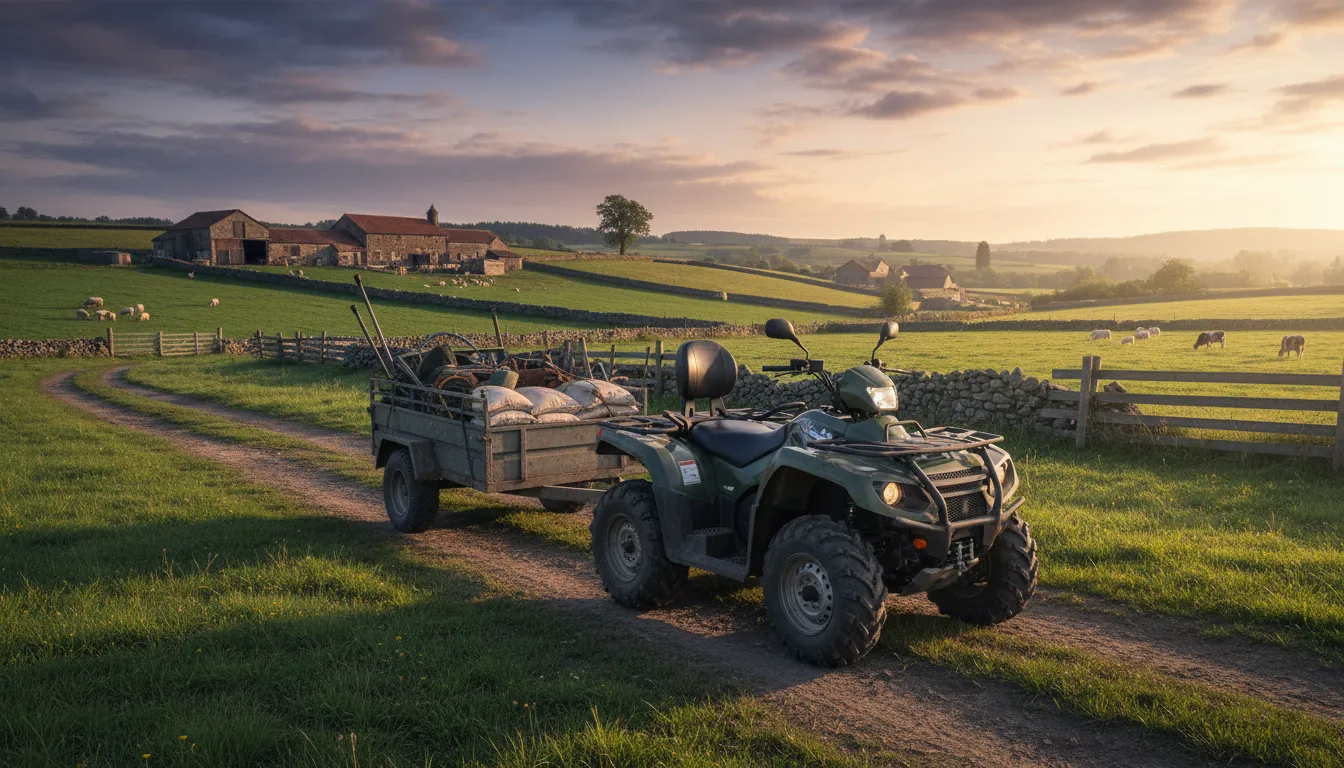
EU subsidies for farm mechanization have created a substantial pipeline of agricultural ATV purchases. Small and mid-size farms across Central Europe are replacing aging equipment with versatile utility ATVs that serve double duty as work vehicles and property transport. Poland's agricultural sector alone has seen a 34% increase in ATV adoption for farm use since 2022.
Adventure Tourism Growth
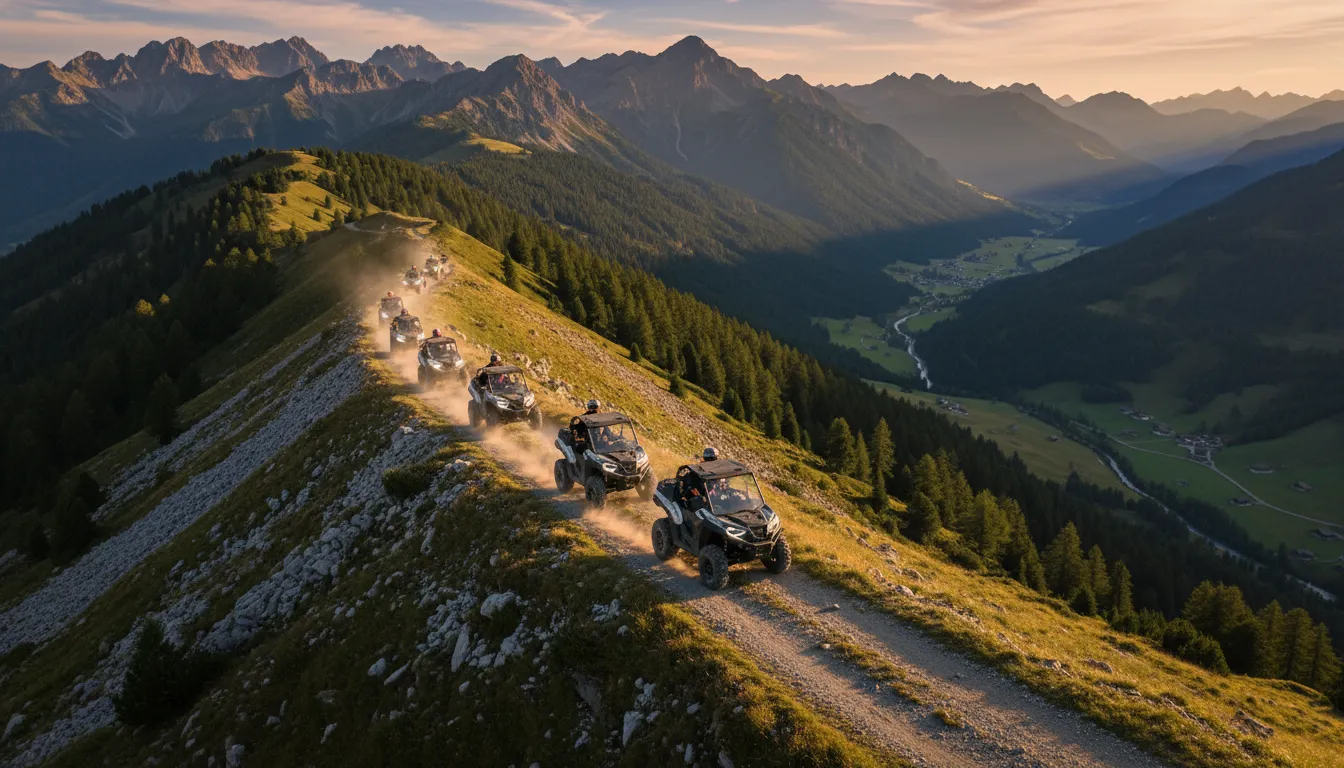
Adventure tourism is booming across CEE. Guided ATV trail tours have become a staple offering in Romania's Carpathian resorts, Poland's Mazury lake district, and Slovakia's mountain regions. Tour operators are purchasing fleet vehicles, creating a steady demand channel that didn't exist five years ago.
Infrastructure Development
New trail networks, improved rural road infrastructure, and designated off-road areas are making ATVs more practical and more attractive. Municipal investments in outdoor recreation infrastructure across Poland and Romania have directly correlated with increased ATV sales in those regions.
Rising Middle Class
Poland and Romania have experienced significant growth in disposable household income over the past decade. A generation of consumers who previously couldn't consider a premium ATV purchase are now actively shopping in the mid-range and premium segments.
The Rise of Chinese Manufacturers
The competitive landscape of the European ATV market has been fundamentally altered by Chinese manufacturers — and this is a trend that benefits buyers.
CFMOTO already commands over 25% of the European ATV market share, a figure that would have been unthinkable a decade ago. They achieved this not through price-cutting alone, but by delivering genuinely competitive machines. The modern Chinese ATV is not the questionable import of 2015. It's a product built on the same global supply chain as its Japanese and American competitors.
Today's leading Chinese ATV manufacturers source critical components from the same Tier 1 suppliers that serve established brands: Bosch fuel injection systems, Delphi electronics, CVTech or QST clutch systems, and KYB or Showa suspension components. The engines are designed with modern CAD tools, validated through extensive dyno testing, and produced on CNC machining lines that rival any factory in the world.
The result is a price-to-performance ratio that has disrupted the traditional brand hierarchy. A $9,000 Chinese-manufactured ATV now delivers what a $14,000 machine offered five years ago. This isn't about cutting corners — it's about manufacturing economics and vertical integration.
BRCP follows this trajectory with the GRIT 1000R, powered by QJMotor's proven 976cc V-twin platform — the same engineering group behind many of the most successful Chinese powersports products in Europe.
Regional Spotlight: Central & Eastern Europe
Poland: The Breakout Market
Poland's ATV market is experiencing a growth phase that mirrors what Western European markets went through in the early 2010s — but faster. Several factors converge: a strong outdoor culture, expanding trail infrastructure, agricultural modernization, and growing consumer purchasing power. The Polish middle class has grown by over 40% in the past decade, and recreational vehicle purchases are following the curve. Dealer networks are still being established in many regions, creating opportunity for early movers.
Romania: Where Agriculture Meets Adventure
Romania presents a dual-use case that makes the market particularly attractive. On one hand, agricultural modernization is driving utility ATV demand in rural areas. On the other, the Carpathian mountain range has become a magnet for adventure tourism, with ATV tours becoming a premium experience in regions like Brașov, Sibiu, and Maramureș. The combination of agricultural utility and tourism fleet demand creates a diversified and resilient market.
Slovakia: Small but Premium
Slovakia's ATV market is smaller in absolute terms but skews heavily toward the premium segment. Slovak buyers tend to be well-informed, comparison-shop extensively, and prioritize build quality and EU compliance. The proximity to Austria's mature powersports market has created sophisticated consumer expectations. For brands that can deliver premium machines with proper documentation, Slovakia offers strong margins.
Germany: The Anchor Market
Germany remains the dominant single market in Europe for ATVs, but it's also the most regulated. Strict TÜV requirements, emissions standards, and road homologation rules create a significant barrier to entry for many manufacturers. This regulatory environment actually benefits compliant brands — machines with full EU type approval and proper documentation command premium pricing because they can be legally registered and insured. German buyers pay more, but they also expect more: proper service networks, warranty support, and parts availability.
Key Trends Shaping 2026 and Beyond
Electrification: The First Wave
The first mass-produced electric ATVs are entering the market in 2026. While range and charging infrastructure remain constraints for deep off-road use, electric models are gaining traction in agricultural, municipal, and resort applications where daily range requirements are predictable. The technology is not yet a replacement for a 976cc V-twin on a mountain trail, but it's carving its own segment.
Smart Technology Integration
GPS tracking, IoT connectivity, and smartphone integration are becoming standard features rather than premium add-ons. Fleet operators can now monitor vehicle location, maintenance schedules, and usage patterns remotely. For individual owners, features like digital trail mapping and ride logging are enhancing the ownership experience.
Premiumization
A clear industry-wide trend: buyers are trading up. Budget ATVs still sell, but the mid-range and premium segments are growing at 2-3x the rate of the entry-level market. Consumers are willing to pay more for machines that offer better build quality, longer warranty coverage, and stronger resale value. This premiumization trend directly benefits manufacturers positioned in the quality mid-range — competitive pricing paired with premium features.
Regulatory Evolution
The EU is actively working toward clearer ATV classification and road access frameworks. Current regulations vary significantly by country, creating friction for buyers and dealers alike. Harmonized standards would expand the addressable market substantially by simplifying registration, insurance, and road access across borders.
Used Market Growth
The used ATV market in Europe is expanding rapidly, with dealer margins on used units running 2-3x higher than new vehicle sales. As the installed base grows, the secondary market creates a self-reinforcing cycle: accessible entry pricing on used machines brings new riders into the ecosystem, many of whom eventually upgrade to new premium models.
What This Means for Buyers
The market dynamics of 2026 are overwhelmingly favorable for ATV buyers across Europe.
More competition means better value. The entry of Chinese manufacturers has compressed pricing across every segment. Machines that would have cost 30-40% more five years ago are now accessible at competitive price points without sacrificing component quality.
EU compliance is becoming standard. The days of importing a machine and hoping it passes inspection are fading. Serious manufacturers now deliver EU-compliant vehicles with full type approval, proper documentation, and COC certificates. The GRIT 1000R, for example, ships with complete EU homologation — ready for registration in any member state.
Better parts and service. As dealer networks expand and manufacturers invest in European logistics, parts availability and service quality are improving across the board. Buyers in Poland or Romania now have access to service infrastructure that didn't exist three years ago.
Premium features at competitive prices. A 976cc V-twin engine, selectable 4x4 with locking differential, electronic fuel injection, and a fully independent suspension — features that once defined the $15,000+ segment — are now available at significantly more accessible price points.
What This Means for Dealers and Investors
The European ATV market in 2026 presents a clear investment thesis for dealers and business operators.
Underserved markets still have room. Central and Eastern European markets — particularly Poland and Romania — remain significantly under-dealered compared to Western Europe. Establishing a dealer presence in an underserved region today means capturing territory in markets that are growing at double-digit rates.
Service revenue is the real margin. Unit sales generate revenue, but service, parts, and accessories generate margin. Dealers who build strong service capabilities alongside sales operations are seeing service revenue approach or exceed sales revenue within 2-3 years of establishment.
Logistics partnerships matter. The ability to consistently deliver machines, parts, and support is the differentiator in emerging markets. Partnering with brands that have established European logistics — warehousing, parts distribution, warranty processing — significantly reduces operational risk.
Early mover advantage is real. In markets that are still developing their dealer infrastructure, the first competent dealer in a region typically captures 60-70% of that territory's volume. Waiting for the market to mature means competing for share instead of establishing it.
The BRCP Position
BRCPGROUP enters this expanding market with a focused strategy: deliver a premium ATV at competitive pricing, with full EU compliance and reliable logistics across Central Europe.
The GRIT 1000R is built on QJMotor's proven 976cc V-twin platform — 92 horsepower, selectable 4x4, electronic fuel injection, and a chassis designed for both utility work and aggressive trail riding. It's positioned in the premium segment not by price alone, but by specification: the machine competes with vehicles that cost 30-40% more from established brands.
BRCP's dealer network is expanding across Poland, Romania, Slovakia, and Germany. Each market receives full EU documentation, managed logistics from European warehousing, and localized support. For dealers, this means reduced risk and operational simplicity. For buyers, it means a premium machine backed by accessible, in-country service.
The European ATV market in 2026 isn't a speculative opportunity. It's a documented growth market with clear demand drivers, expanding infrastructure, and improving competitive dynamics. The question isn't whether the market will grow — the data has already answered that. The question is who will be positioned to capture that growth.
If you're considering the business side, read our complete guide to becoming an ATV dealer in Europe. For buyers interested in agricultural applications, our guide to ATVs in farming covers the practical ROI. And for background on how Chinese ATV quality has evolved, see our industry deep-dive.